The Isa Myth and the difference between Hawaiian Isa
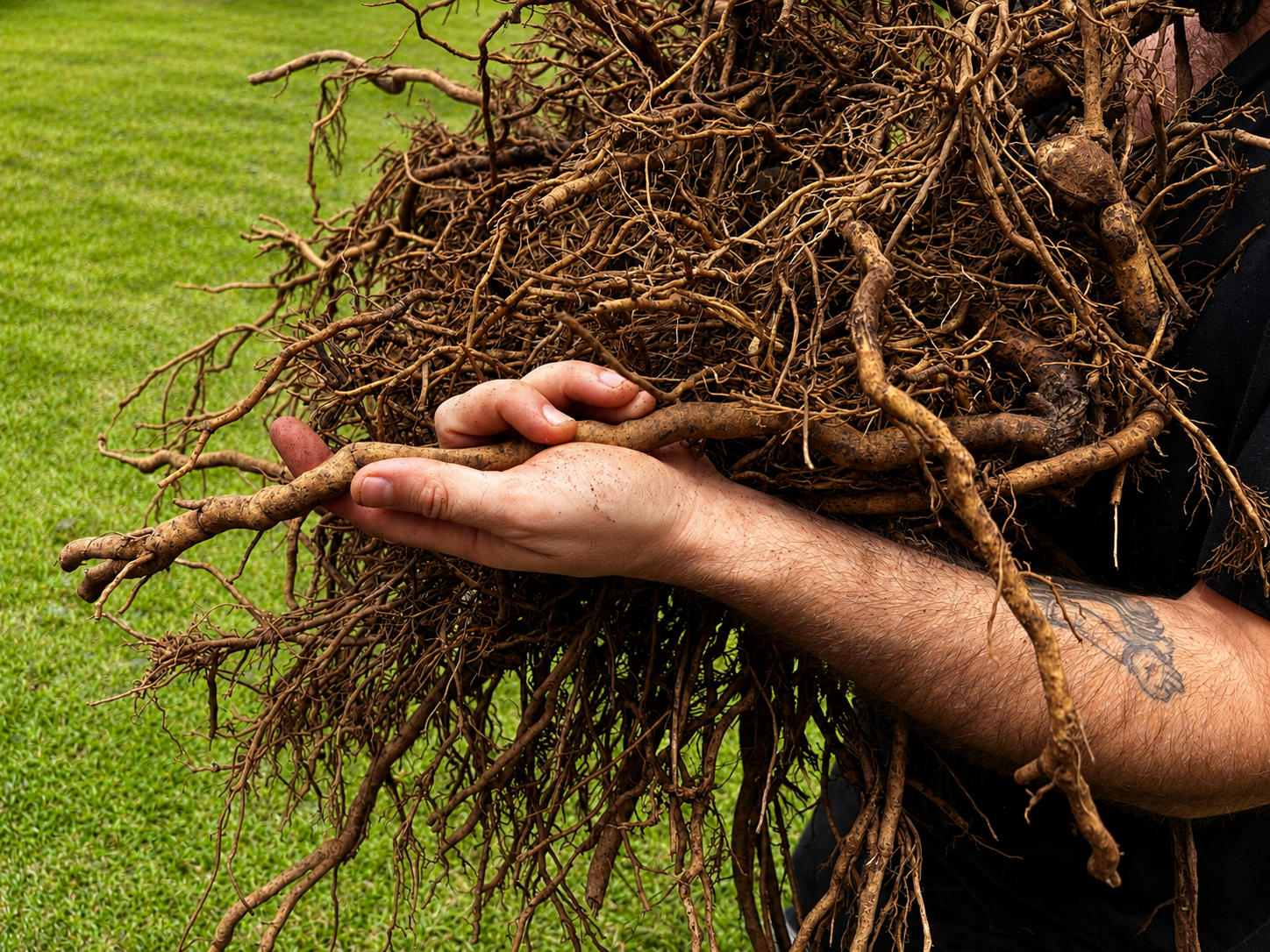
Hawaiian ʻAwa (kava) cultivation—especially the Isa variety—has long been misunderstood.
There is a persistent myth that Isa kava is inherently more toxic. This narrative largely traces back to efforts in regions like Vanuatu to distinguish and protect their export market by promoting the concept of “noble” kava varieties. While cultivar classification has value, the blanket dismissal of Isa does not hold up under modern analysis or real-world use.
Hawaiian Isa: What Our Research Is Showing Us
Our laboratory testing and hands-on experience have led us to believe that Hawaiian-grown Isa ʻAwa is developing a distinct local expression. To us, these findings suggest that Kava Dave’s theories may have something to offer.
Compared with the 2 5 6 profile we have used as our Isa reference, our tested sample showed a chemotype beginning 2 6 5/3, with dihydromethysticin (5) almost equal to Yangonin (3). Particularly notable is the prominence of methysticin (6), which ranked second in the sample’s kavalactone profile. this points to Hawaiian Isa being its own cultivar neither fitting into the Noble or Tudei Category, and lacking the Kava hangover effect.
Kava Dave’s theory, from Big Island, as we understand it, is that because cultivated kava is propagated clonally rather than routinely crossbred from seed, its character develops through its relationship with its surroundings: where it is planted, who plants it, the needs and intentions of its caretakers, and even the energetic influence—or “vibration”—of nearby varieties. In this view, those relationships help shape the plant’s constitution and defining qualities over time.
This is a theory we are exploring through our own cultivation, observations, and testing. We see our results as a reason to keep investigating how Hawaiian-grown Isa expresses itself in our environment.
Methysticin is one of the six major kavalactones found in Piper methysticum. Its potential role in relaxation and neuroprotection makes it especially interesting to us. Laboratory research has investigated its effects on nerve-cell signaling, including inhibition of voltage-gated sodium channels, while animal research has explored its neuroprotective potential. These findings are promising areas of study, rather than established benefits of our rosin in people.
For us, this work is personal and ongoing. We grow the plants, observe their character, refine our process, and compare those experiences with laboratory results. Our research belongs to that living relationship with Hawaiian ʻAwa—and we believe it deserves room to develop.
From both hands-on experience and lab testing, we’ve found that Hawaiian Isa ʻAwa contains higher levels of key kavalactones, including kavain and our rosin contains lower content of flavokavain B, blamed for liver problems, due to our superior harvesting merthods. However, this isn’t because Isa is disproportionately high in any single compound—it’s because it contains more of the full spectrum of kavalactones overall. In practice, we consistently observe approximately double the total kavalactone yield, which is reflected in our process: Isa produces roughly twice the rosin yield compared to noble Hawaiian varieties.
Equally important is the plant’s adaptation. Kava (Piper methysticum) does not reproduce from seed; it is propagated clonally. Over time, Isa grown in Hawaii has effectively become localized—adapting to the soil, climate, and cultivation practices of the islands. This makes it distinct from Isa grown in places like Papua New Guinea, both in character and in performance.
From a sustainability standpoint, Isa offers major advantages. It reaches maturity in approximately 3 years, compared to the typical 5 years for many noble varieties. This shorter cycle supports:
More consistent access to fresh, locally grown ʻAwa
Reduced pressure on land and resources
A more resilient and scalable Hawaiian kava industry
It also supports something just as important: local production with integrity. Growing and processing ʻAwa in Hawaii helps ensure:
Proper use of the correct plant parts
Transparent, small-batch production methods
Fair wages and ethical labor practices
A true farm-to-consumer supply chain within the United States
We are extraction artists at our core. Our work is rooted in experimentation, observation, and measurable results—not inherited assumptions or market-driven narratives.
Isa ʻAwa is not a lesser cultivar. It is a powerful, efficient, and locally adapted expression of kava that deserves to be evaluated on data, craftsmanship, and experience—not outdated stigma.
And from where we stand, the results speak for themselves.
The Truth
Our Isa ʻAwa is crafted for clarity, not sedation. It’s not designed to knock you out or leave you feeling heavy—it’s meant to support a balanced, functional yet strong experience.
Discomfort like nausea is often associated with excess plant starches and poorly refined material. Through our process, those heavier components are carefully removed, resulting in a cleaner, smoother product that’s easier on the body.
We then take it a step further. Using a proprietary fractional extraction method, we refine and rebalance the full spectrum of kavalactones—preserving their synergy while enhancing consistency from batch to batch. The result is an experience that is both reliable and elevated.
There’s a reason our community continues to grow. It comes down to proximity and care. We grow, harvest, and work directly with fresh Hawaiian ʻAwa—hands on, every step of the way. That connection to the plant matters, and you can feel it in the final product.
We’re not a typical kava company. We are a roots 'Awa company.
We bring the Hawaiian process, the environment, and the knowledge base directly to you—so what you experience isn’t just kava, but a true expression of where it comes from.